Ever wonder how The Weeknd crafted the massive sound of Blinding Lights? The team tracked Abel's vocals through a Sony C-800G and mixed entirely in the box! #TheWeeknd #BlindingLights #MusicProduction #InTheBox
The story behind the track
Crafting the 1980s Sound of The Weeknd's Blinding Lights
Abel Tesfaye teamed up with Max Martin and Oscar Holter to produce an uptempo synth-pop single tracked through classic tube gear and mixed entirely in the box.
An 80s Revival with Modern Punch

Abel Tesfaye released Blinding Lights in November 2019 as an uptempo synth-pop single. Production duties fell to Abel Tesfaye alongside Swedish songwriters Max Martin (...Baby One More Time – Britney Spears; I Want It That Way – Backstreet Boys) and Oscar Holter (Save Your Tears – The Weeknd; My Universe – Coldplay & BTS), with Jason Quenneville contributing additional keyboards. Chief recording engineers Sam Holland (Blank Space – Taylor Swift; Into You – Ariana Grande), Shin Kamiyama (After Hours – The Weeknd), and Michael Ilbert (1989 – Taylor Swift; The Black and White Album – The Hives) captured the performances across California and Sweden.
Mix engineer Serban Ghenea balanced vintage hardware synthesizers against punchy digital percussion entirely inside computer software. The arrangement relies on a fast tempo of 171 beats per minute. This pace creates a relentless sense of forward motion beneath soaring lead vocals.
Mix engineer Serban Ghenea balanced vintage hardware synthesizers against punchy digital percussion entirely inside computer software.
Isolation and Precision Across Two Continents
Primary vocal sessions took place in Studio C at Conway Recording Studios in Los Angeles. The tracking room features a dedicated isolation booth, which keeps external room noise out like a sealed chamber. This acoustic control let the engineers track whisper-quiet falsettos and loud belts without room reflections bleeding into the microphone.
Overdub sessions and synth programming moved between Conway Recording Studios and MXM Studios in Los Angeles and Stockholm. Both tracking facilities paired vintage analog keyboards directly with modern digital converters. That workflow preserved the character of classic sound generators while keeping noise floors completely silent.
That workflow preserved the character of classic sound generators while keeping noise floors completely silent.
Deep dive: Lead Vocal Tracking Chain
Abel Tesfaye's lead vocal combines crisp top-end presence with steady dynamic control. The hardware tracking chain kept every syllable intelligible over driving electronic synths. It achieved a bright pop character without harsh sibilance.
- Microphone. A Sony C-800G valve condenser microphone picked up vocal nuances, using its built-in cooling system to maintain low noise and an open top end.
- Preamplifier. A Neve 1073 Mic Preamp boosted the microphone signal, adding harmonic weight through its discrete transistor circuit.
- Compressor. A Tube-Tech CL 1B optical compressor leveled volume spikes with transparent gain reduction, acting like an automatic hand riding the fader.
- Converter. An Avid HD I/O interface converted the analog signal into digital audio with clean, uncolored precision.
To match this chain for free, track through your audio interface with a clean condenser mic, then add a stock opto-compressor and a high-shelf EQ boost.
Modern versions of the gear
MJUC jr.
KlanghelmThis free dynamic controller applies smooth leveling to vocal peaks while imparting subtle vintage tube warmth.
Models the Variable-mu tube compressors
Blindfold EQ
AudioThingA completely free analog-style equalizer that lets you gently lift vocal presence without introducing harshness.
Models the Analog graphic and shelving equalizers
Fresh Air
Slate DigitalA free exciter plugin that lifts high frequencies, helping affordable microphones capture an airy condenser sound.
Models the Vintage high-frequency dynamic exciters
Producer tip · Gated 80s Snare Reverb · Works in any DAW
Recreate an explosive gated drum room
I'd start by loading a snappy vintage digital snare sample onto an audio track. Send that snare to an auxiliary return channel loaded with a non-linear digital reverb, which acts like a room that cuts off abruptly. Adjust the decay time to around two hundred milliseconds so the ambient tail stops before the next drum hit strikes. Place a low-cut EQ on the reverb channel to clear out rumble below one hundred hertz, keeping your low end clear.
Auxiliary return channelNon-linear digital reverbLow-cut EQ
Tracking Vocals and Analog Synthesizers
Tracking started in mid-2019, splitting time between Conway Recording Studios in Los Angeles and MXM Studios. Assistant engineers Cory Bice, Jeremy Lertola, and Sean Klein prepped sessions for Abel Tesfaye in Studio C at Conway Recording Studios. Lead and backing vocal passes ran through a high-end tube microphone to capture bright top-end frequencies.

Synthesizer riffs and rhythmic foundations came together at MXM Studios with Max Martin and Oscar Holter. The team reportedly tracked classic instruments like the Roland Juno-60 through direct input boxes into discrete preamplifiers. Serban Ghenea mixed the song in the box at MixStar Studios before Dave Kutch mastered the digital stems at The Mastering Palace.
Lead and backing vocal passes ran through a high-end tube microphone to capture bright top-end frequencies.
Song fingerprints
 Gated Non-Linear ReverbThe snare feeds an AMS RMX16 digital reverberation processor on the NonLin preset, cutting off abruptly to create a punchy retro ambiance.
Bucket-Brigade Stereo ChorusA Roland Juno-60 reportedly engaged its built-in analog Chorus II circuit during tracking, spreading synth brass wide across the stereo field.
Dynamic Low-End CarvingEngineers notched the synth bass around sixty hertz beneath the kick drum, preventing low-frequency mud while preserving punch.
Slapback Vocal StagingLead vocals feed a vintage tape slapback delay and plate reverb, keeping the dry take forward while providing spatial depth.
The arrangement · Chord structure
Fm
Cm
E♭
B♭
The harmonic progression borrows a major subdominant B flat chord, evoking the bright feel of vintage 1980s pop.
Intro0:00 - 0:22 · 16 bars
Electronic drums enter, followed at Bar 9 by the chorused lead synth hook over pulsing bass.
Verse 10:22 - 0:44 · 16 bars
The main synth lead cuts out, leaving dry drums and synth bass beneath an intimate vocal.
Pre-Chorus 10:44 - 0:56 · 8 bars
Pads sweep open with low-pass filtering to build tension toward the chorus.
Chorus 10:56 - 1:18 · 16 bars
The central synth hook returns alongside wide vocal layers and full-bandwidth drums.
Verse 21:18 - 1:29 · 8 bars
A truncated verse maintains momentum with subtle open hi-hat accents.
Pre-Chorus 21:29 - 1:41 · 8 bars
Quarter-note vocal delays build dynamic energy ahead of the downbeat.
Chorus 21:41 - 2:03 · 16 bars
The chorus hook repeats with octave vocal doublings and open filter sweeps.
Bridge2:03 - 2:25 · 16 bars
The rhythm switches to a half-time feel while vocals shift to high falsetto.
Chorus 32:25 - 2:48 · 16 bars
The dense climax features stacked backing vocal shouts and full electronic drums.
Outro2:48 - 3:20 · 24 bars
Vocals drop out as the looping synth hook undergoes progressive low-pass filtering into an abrupt finish.
The arrangement relies on abrupt shifts in instrumentation to generate dynamic peaks without slowing down. Verses drop down to bare bass pulses and dry drums to give the lead vocal breathing room. Pre-choruses build tension with resonant filter sweeps before choruses deliver full stereo width.
Instruments, then and now
ThenRoland Juno-60
Now
HardwareRoland Juno-XRoland JU-06A
SoftwareTAL Software TAL-U-NO-LXArturia Jun-6 V
On a budget: Use any free virtual analog synthesizer loaded with a warm saw wave and a wide stereo chorus effect.
ThenRoland Jupiter-8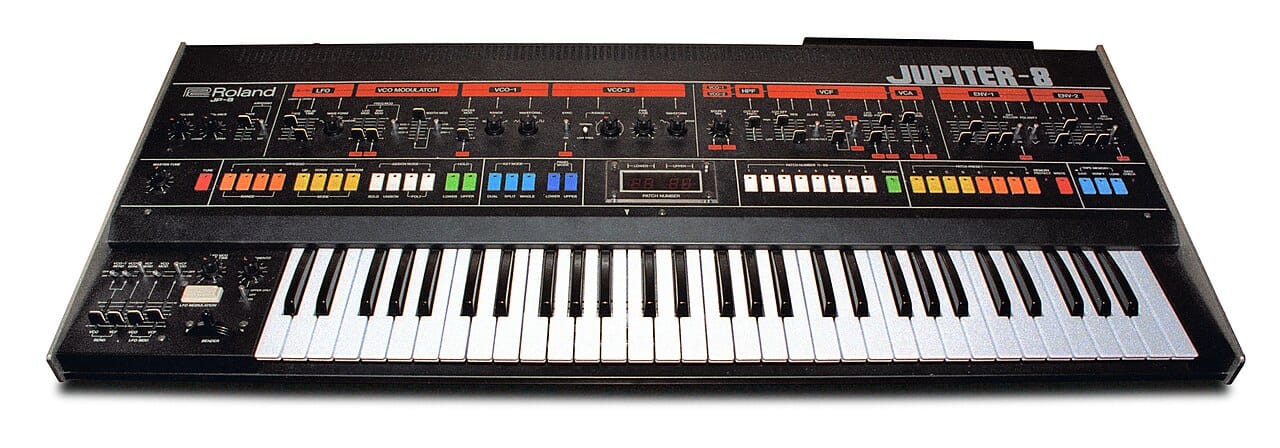
Now
HardwareRoland System-8Roland JP-08
SoftwareArturia Jup-8 V4TAL Software TAL-J-8
On a budget: Detune two sawtooth oscillators in a free software synth and dial in a gentle low-pass filter envelope.
Now
HardwareBehringer RD-78Roland TR-8S
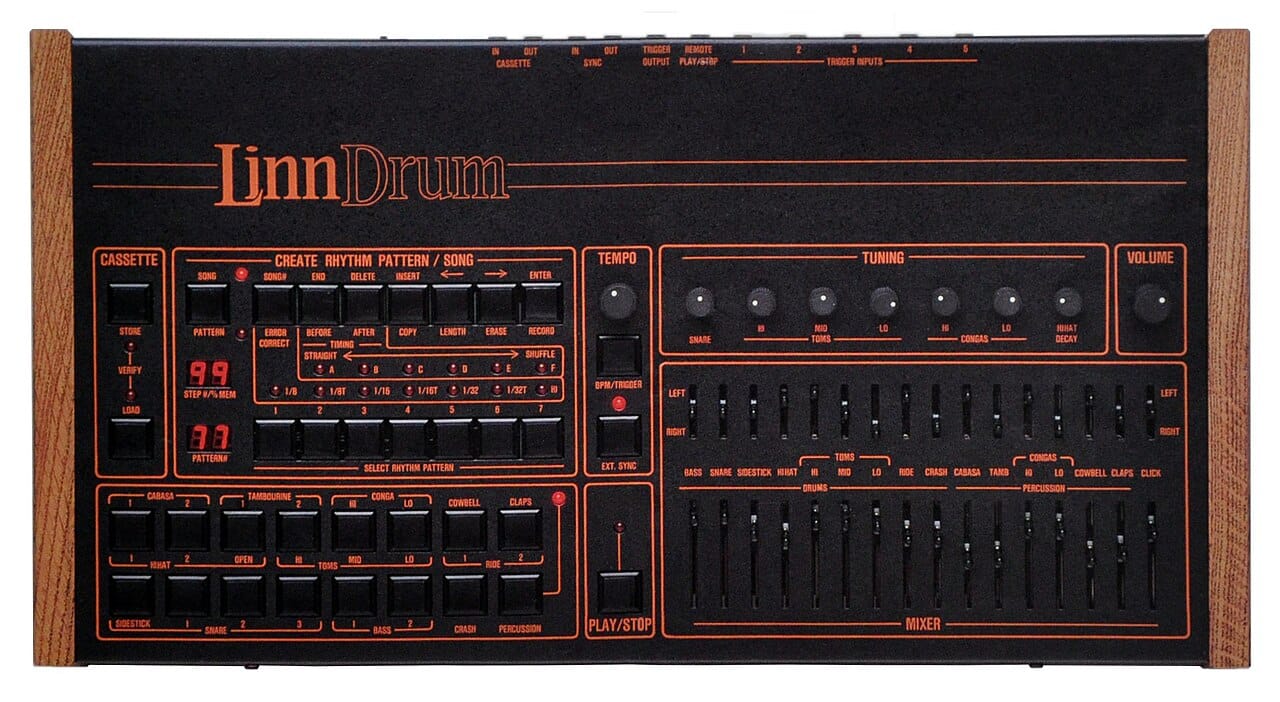
SoftwareSamples from Mars LinnDrum TapeArturia Vintage Drum Machines
On a budget: Download free public-domain vintage digital drum machine samples and load them into your DAW stock sampler.
Now
HardwareRoland TR-08Behringer RD-8
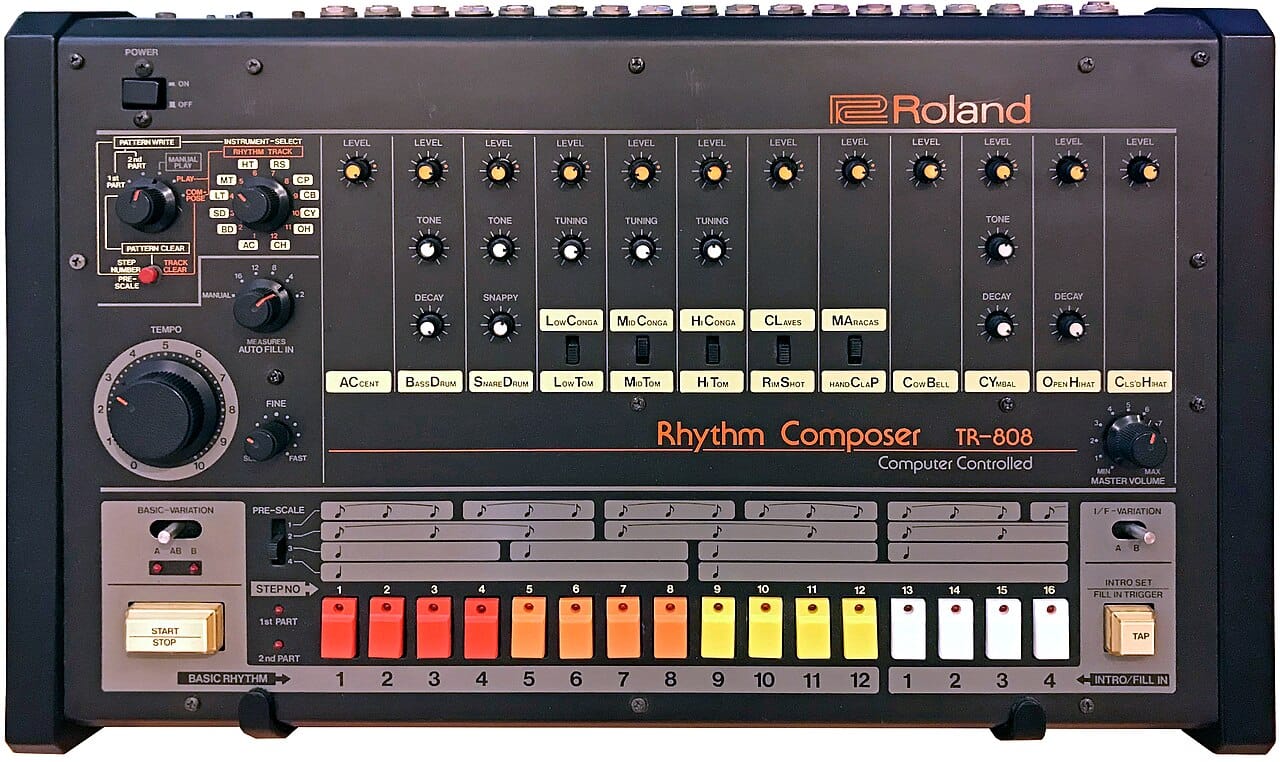
SoftwareRoland Cloud TR-808D16 Group Nepheton 2
On a budget: Generate an electronic sub kick using a free stock sine wave generator swept downward with a pitch envelope.
Did you know?
- Mix engineer Serban Ghenea mixed the entire track in the box using Avid Pro Tools HDX without touching an analog mixing console.
- Mastering engineer Dave Kutch processed the digital stems through a Rupert Neve Designs Portico II Master Buss Processor and Manley Massive Passive EQ.
- The song sequences its 171 beats per minute tempo to a sample-accurate digital timeline grid without tempo drift.
Share this story
THE MIXDOWN
Serban Ghenea mixed the track inside digital software, balancing vintage synthesizers against punchy drum machines.Blinding Lights · The Weeknd
VOCAL TRACKING
Lead and backing vocal passes ran through a high-end tube microphone to capture bright top-end frequencies.Blinding Lights · The Weeknd
THE TEMPO
The song sequences its 171 beats per minute tempo to a sample-accurate digital timeline grid.Blinding Lights · The Weeknd
instagram
x
Behind Blinding Lights: Max Martin and Oscar Holter layered vintage synths at 171 BPM, while Serban Ghenea mixed the stems 100% in the box. #TheWeeknd #AudioEngineering #StudioLife
tiktok
How The Weeknd got that punchy 80s drum sound on Blinding Lights! Discover the secret of non-linear gated reverb. #MusicProducer #MixingTips #TheWeeknd #Synthwave
facebook
Take a look inside the production of 'Blinding Lights' by The Weeknd. Discover how Abel Tesfaye, Max Martin, and Serban Ghenea blended classic analog synthesizers with modern in-the-box mixing workflows. #MusicProduction #AudioEngineering #TheWeeknd